Written by: Carolina de Miranda, Economic Inclusion Sr. Consultant.
Building a New Generation of Public Policies
How can a government support thousands of entrepreneurs without losing quality, closeness, and capacity to adapt?
This is one of the questions we are addressing together with the Brazilian Ministry of Social Development (MDS) through Acredita no Primeiro Passo, one of the most ambitious economic inclusion programs in Latin America.
By late 2025, the program had reached 290,000 participants, of which 70% were women. The entrepreneurship component of Acredita offers low-interest, collateral-free microloans to entrepreneurs registered in the Cadastro Único, Brazil's social registry, through alliances with financial institutions. The goal is to support entrepreneurs in starting or strengthening their businesses and increasing their income as a strategy to escape poverty.
Acredita was designed to be much more than a microloan program. It recognizes that access to financing alone is rarely sufficient for entrepreneurs to thrive. Evidence shows that sustainable income growth requires combining the ability to provide support and permanent access to practical guidance. Together with the MDS, we are strengthening these components to make the program comprehensive and increase its potential for transformation.
While the work responds to specific needs of the Brazilian context, the learning we are generating has high potential for other countries.
Particularly relevant are our learnings on how to strengthen support in large-scale public programs, and how to combine human support with digital tools without replacing the relationship.
The Capacities of Business Advisors
One of the main priorities of the alliance is to strengthen the role of Business Advisors, professionals linked to financial institutions who not only connect entrepreneurs with microloans opportunities, but also accompany them throughout their entrepreneurial journey, providing guidance, strengthening their capacities, and helping them overcome the challenges of their businesses.
Working in close collaboration with the MDS and Aliança Empreendedora, we play a leadership role in technical assistance to design and implement the National Training Strategy for Business Advisors.
During the last year:
We launched a virtual learning platform to train Business Advisors across the country, with a curriculum composed of four modules:
- Entrepreneurship at the base of the pyramid
- Understanding the entrepreneurs participating in Acredita and the role of the Business Advisor
- Facilitation techniques and personalized support
- Business plan development and participant monitoring
We developed a methodological guide to support Business Advisors in conducting in-person workshops with participants.
We launched a national communication and dissemination strategy to promote training among the allied institutions of Acredita.
Together, these resources make it possible to establish a consistent national methodology for training, while strengthening the capacities of financial institutions working for the first time with entrepreneurs in poverty or rural contexts. This experience demonstrates that it is possible to standardize support methodologies, strengthen the capacities of those implementing public programs, and improve the quality of support without losing flexibility to adapt to different contexts.
Continuous Support Through Digital Innovation
The work of Business Advisors is more effective when entrepreneurs have access to support between in-person sessions, not only when the advisor is available. To provide this continuous support, we are adapting our AI-powered chatbot for Brazil, Con-Héctor.
Con-Héctor represents a new generation of responsible artificial intelligence tools designed to complement human support, personalize learning, and provide continuous support to entrepreneurs who have had limited access to business development services.
The new version has been specifically designed for Acredita participants and offers guidance on topics that entrepreneurs identify as priorities: business planning, management of family and business finances, digital marketing, access to microloans, and gender equity.
Additionally, it incorporates new artificial intelligence features that provide more personalized support and includes an easy-to-use tool that helps entrepreneurs create communication and marketing materials for their businesses.
In April 2026, we tested the adapted version of Con-Héctor with a small group of Acredita participants through in-depth focus groups. The learnings obtained are being used to refine the platform before launching a larger-scale pilot.
Once implemented at scale, Con-Héctor will complement the work of Business Advisors, providing entrepreneurs with continuous access to reliable information and practical guidance whenever they need it.
This experience provides learnings on how to use digital tools to complement, not replace, in-person support. In large-scale public programs, where advisors serve a high number of participants, digital solutions like Con-Héctor can intensify support, provide continuous assistance between in-person sessions, and make support models scalable without proportionally increasing operational costs.
Indigenous Women Entrepreneurs in the Amazon
The alliance has also expanded into a new area of work. The MDS is implementing, within the framework of Acredita, a pilot program aimed at indigenous communities in northern Brazil, with special emphasis on women artisans.

Unlike the main program, this pilot replaces microloans with the provision of productive assets in kind, complemented by training, support for consumption, and market-linking strategies. This combination brings the intervention closer to the methodology of Graduation.
We co-designed two practical workshops based on the following priorities: Financial Education and Digital Marketing.
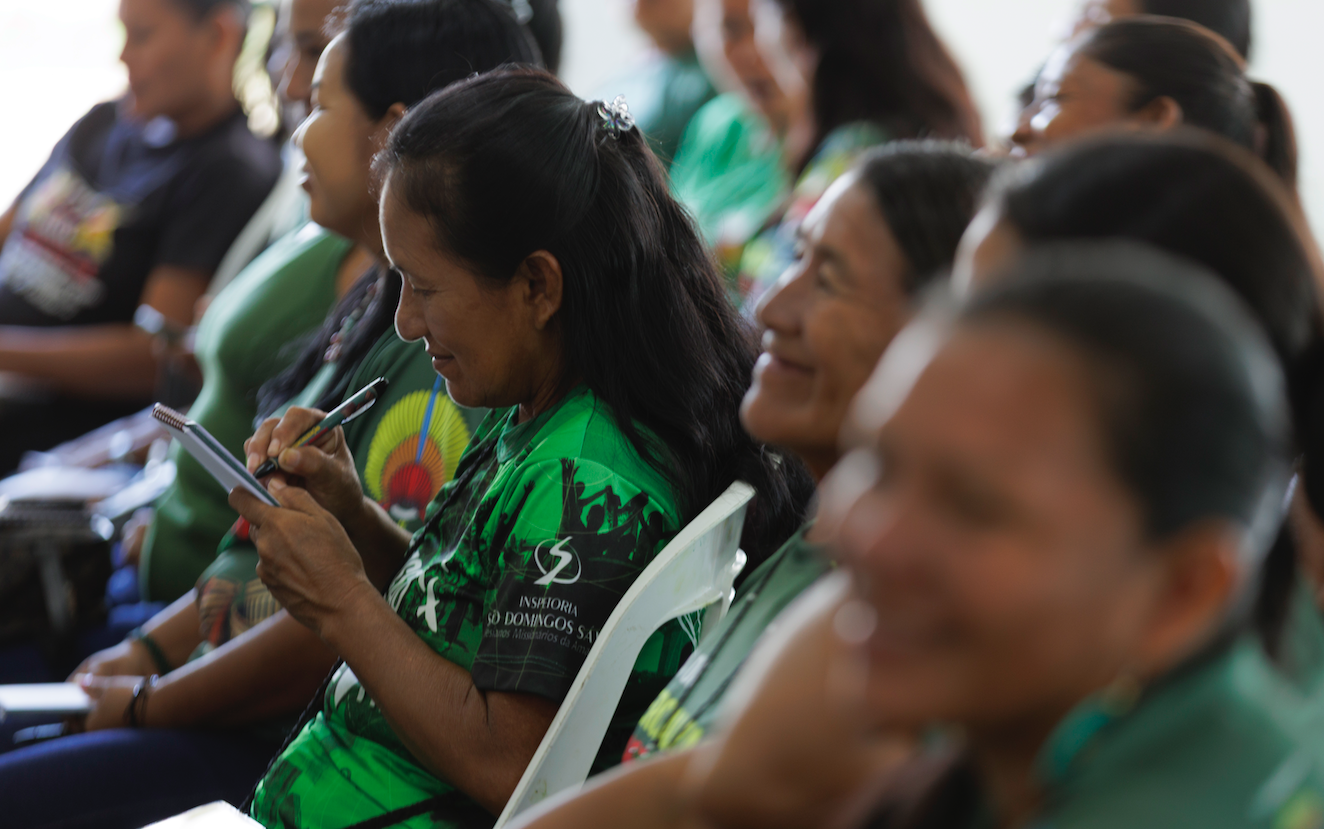
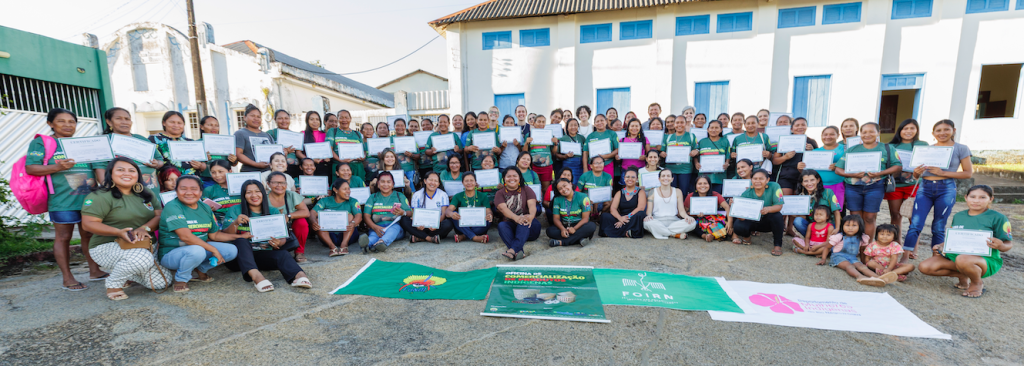
We held the first workshops in June 2026 in the state of Amazonas, where 70 women artisans and community leaders from 14 different indigenous peoples participated.
Beyond the initial workshop, the women decided to share these learnings with other artisans through their associations and communities. This expanded the reach of what we had worked on together.
This initiative demonstrates how a national economic inclusion program can build solutions jointly with different contexts and populations, adjusting its components and implementation mechanisms without losing its main objective: supporting people in building sustainable livelihoods.
Beyond strengthening individual businesses, this strategy builds community leadership of women capable of making decisions about the knowledge they share, generating support networks, and expanding impact within their communities.
Looking to the Future
Our goal is not only to strengthen the program, but to contribute to governments developing permanent capacities to provide economic inclusion services at scale.
In 2025 and 2026, we received recognition in the Brazil's National Prize for Socioeconomic Inclusion, an initiative led by the MDS. The award recognizes organizations, companies, states, and municipalities that have made significant contributions to promote the socioeconomic inclusion of families registered in the Cadastro Único.
The recognition reflects the value of the alliance. In this collaboration, the MDS brought deep knowledge of Brazilian public policy and local context. We complemented this with specialized technical assistance in areas where additional capacity was needed. Together, we identified and resolved specific implementation bottlenecks in Acredita.
This achievement reinforces our commitment to continue supporting the strengthening and continuous improvement of the program.
Much remains to be done, but our alliance is already contributing to building a new vision of economic inclusion in Brazil. Rather than viewing microloans as an isolated solution, Acredita increasingly incorporates the elements that evidence identifies as fundamental for producing sustainable transformations: structured support, capacity development, access to productive assets, and continuous learning. Brazil is demonstrating that public economic inclusion programs can evolve toward more comprehensive models.
Beyond Brazil, this experience is providing valuable learnings for other countries seeking to strengthen public economic inclusion programs. We highlight the importance of professionalizing and standardizing support, developing capacities within implementing institutions, and using digital tools to expand the reach of support without compromising its quality.
By combining human support with technological innovation, this collaboration demonstrated that it is possible to build effective, scalable, and sustainable support models, capable of reaching hundreds of thousands of people and inspiring similar initiatives in other countries seeking to promote economic inclusion.
To learn more about our initiatives, follow us on social media, email us at info@fundacioncapital.org or share this content with those who can contribute to this effort.