Written by: Christoph Baker, Senior Climate Change Advisor, and Raquel Maestro Salmoral, Strategic Communications Lead at Fundación Capital.
Let's start with the word action. It indicates the will to transform, to participate in pro-positive activities and movements that seek impact.
Action requires enthusiasm and creativity; an open mindset to innovation and commitment. It means daring and taking risks and challenges to achieve tangible responses to the implications of climate change. But it is also a call to imagine a possible and regenerative future.
The challenges
The fields of application of climate action are diverse. For an organization like Fundación Capital (FK), already deeply rooted in territorial realities, climate action must respond to the needs and challenges of both the participating people and the ecosystems. But there is no true Climate Action without working on the ecosystem as a whole: from the smallest beings at the bottom of the food chain to those at the top. This implies that FK does not focus on products or isolated goals, such as simply reducing CO2. We are interested in working with the entire ecosystem to obtain results such as increasing biomass and balanced biodiversity. Life is only protected and multiplied by working with the entire system.

Climate action requires serious questioning of the economic vision of the world.
It is not simply about defining and implementing small “green” projects, but about altering the status quo. A new approach is needed: rethinking and transforming the current economic system, the status quo that is no longer viable. We need to change course and adopt a truly innovative approach.
The first challenge is mental decontamination. We need to reconfigure the scale of values and priorities in each person, moving away from the law of the strongest to a more inclusive, ecological and human vision. This transformation must begin at the individual level.
Building on the work of Daniel Christian Wahl, regenerative cultures are those that adapt to local conditions and seek to restore ecosystems and communities rather than exploit them. This approach calls for a deep rethinking of our values and beliefs, as well as collaboration to co-create sustainable and resilient solutions.
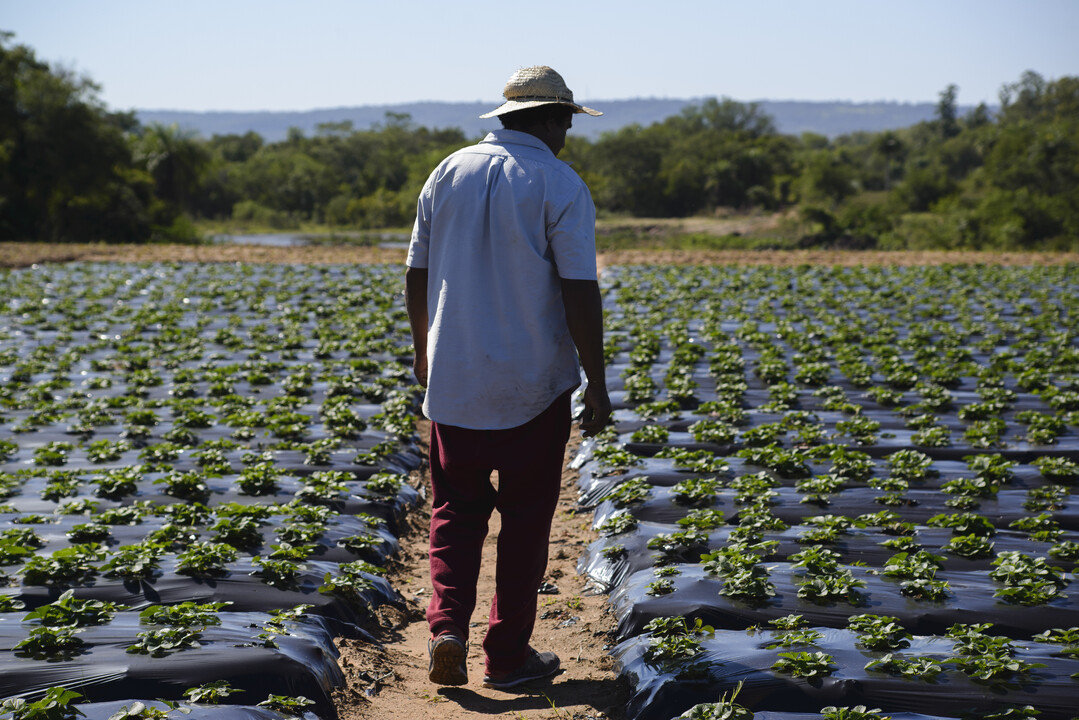
Fundación Capital is immersed in the daily life of the territories and of the people participating in the projects, dialoguing with local communities, confronting ideas, dreaming of better futures, and learning from traditional wisdom. Committed to adopting a comprehensive approach, we seek to cover everything from local dynamics to influencing national and international policies, collaborating with authorities, institutions, local ventures and initiatives. Participation in global actions for social and environmental justice is crucial to amplify the voice of those people and organizations that have so much to contribute.
Excess CO2 and the environmental crisis will not be solved with isolated green technologies that benefit certain businesses. We need to work in the territories with all actors, minimizing aggression and seeking more life and less violence.
It is important to promote a different economic model from the dominant one, based on territories, local entrepreneurship, decarbonization, increased biodiversity, organic farming, sustainable and responsible fishing, reducing pollution (especially plastic pollution), promoting ethical and ecological tourism, environmental awareness, creating/participating in educational and cooperative networks that promote local and sustainable solutions, etc. In other words, a model focused on the regeneration of entire ecosystems and the quality of life in the territories.
These actions must be accompanied by tools and methodologies that measure the impact on ecosystems. Science and data are essential to show progress, but only if they focus on what really matters: life.
Where to start?
At Fundación Capital, it is essential to dedicate time to research and analyze the ecosystems where we work, to identify networks and programs that allow us to learn and experiment with new approaches to address the climate crisis. Awareness and knowledge about the global ecological crisis must be a priority.
It is equally important to recognize that we are not alone. FK is looking for partners because we know that we will not succeed alone. We do not want to be just executors of mitigation projects; we want to be co-authors of lasting ecosystem changes that generate virtuous results. We need funders who invest in a different future for all living beings.
We seek to identify current or new partners, networks and programs at the grassroots territorial level, where we can contribute with our knowledge and experience and, in turn, learn and experiment with new approaches to address climate change, generating virtuous alliances with those who want real transformation.
Awareness and knowledge about the planetary ecological crisis must be a priority..
As an organization, we need to be more competent in the key issues at hand: from pollution, land destruction and biodiversity loss, to rising temperatures and sea levels and the destruction of natural habitats, etc.
Likewise, we must be aware of and value the multiple proactive responses and initiatives already underway by individuals, associations, organizations, public and private companies, seeking to reduce the impact of climate change and direct life towards human activities that are more respectful of nature. Climate action includes a collective effort and requires a holistic approach that, by mobilizing all possible actors and partners, integrates gender equity; social justice; economic well-being within a framework of ecological balance; the reduction of human violence and conflicts; the participation of all subjects present in the territories, including immigrants.
All this is part of the vision, mission, programs and activities of FK.
The first steps
To move towards these objectives, Fundación Capital must clearly position itself in its commitment to Climate Action. It should not be seen as a new workload added to current activities, but should transcend the programs and projects that guide all our actions.
This approach requires a specialized team of colleagues to take on, coordinate and drive the different climate challenges and efforts (as listed above), working closely with field offices (Colombia, Mexico, Paraguay, Mozambique...) and existing programs that are already active on these issues (Biofincas, eco-trade in the Amazon, Safin Network...).
It is necessary that the team benefit from first-hand field experiences. These experiences will not only strengthen our understanding of local/territorial realities, but will also open the doors to new strategic alliances and funding opportunities. These experiences can also help discover new potential partners and donors.
Finally, we must define and consolidate our communication tools within FK, to generate greater awareness and knowledge about the problems and challenges of climate change.
Our colleagues must be the main ambassadors of this cause, continually feeding us with their enthusiasm and proactive attitude, so that they are actors of change and responsible for seeking solutions that help "save the planet."
Opportunities for partnerships: the role of key players in environmental protection
Climate change requires joint action by organizations, companies and governments to generate a real and sustainable impact. Organizations with the capacity to influence on a large scale, such as Fundación Capital, have a unique opportunity to transform local realities, connecting innovative and sustainable solutions with territorial needs.
Impact on a large scale can be achieved through the implementation of regenerative practices, green financial inclusion, and the promotion of digital technologies that facilitate the adaptation of vulnerable communities.

The role of organizations is, therefore, to be catalysts for change, generating spaces for collaboration that allow identifying and addressing socio-environmental challenges in a comprehensive manner. For their part, companies must adopt sustainable and responsible business models that go beyond mitigation and promote the regeneration of ecosystems. Investment in green technology, reducing the carbon footprint and creating alliances are essential.
Finally, governments must lead with inclusive and ambitious public policies that facilitate the transition to a low-carbon and climate-resilient economy. Only through the participation of all actors and a coordinated approach will it be possible to successfully face the climate challenge and build a more sustainable future for the coming generations.
This article was originally published on LinkedIn on October 24, 2024.
To learn more about our initiatives, follow us, write to us at [info@fundacioncapital.org](mailto:info@fundacioncapital.org), or share.